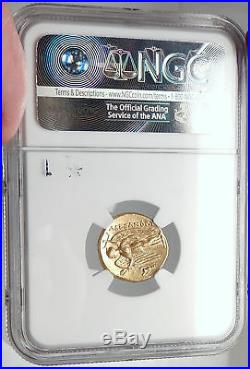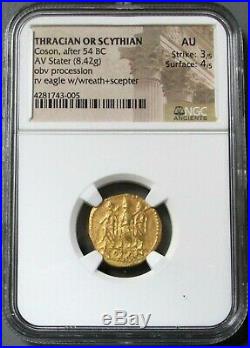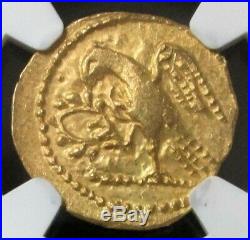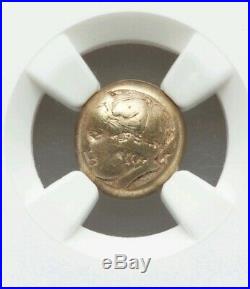
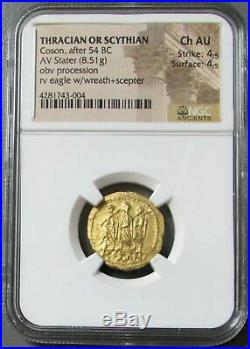

54 Bc. Gold Ancient Thracian Stater Coson Coin Ngc Choice About Unc 4/4

54 Bc. Gold Ancient Thracian Stater Coson Coin Ngc Choice About Unc 4/4
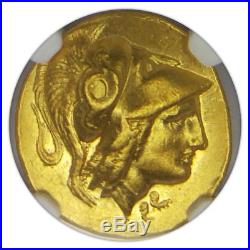
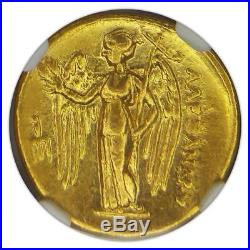
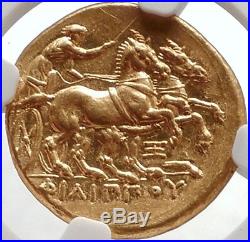
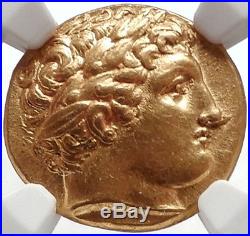
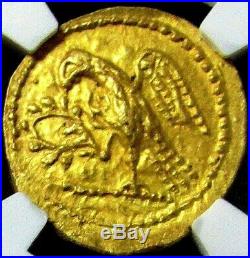
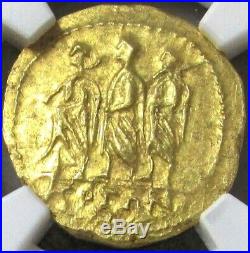
DACIAN (GETAE) KINGDOM ca. 1st CENTURY BC-2nd CENTURY AD. REIGN OF THE DYNAST. (REIGNED AFTER 54 BC). CERTIFIED BY NGC CHOICE ABOUT UNCIRCULAATED. TWO LICTORS CARRYING FASCES FLANKING AND ACCOMPANYING A ROMAN CONSUL (SAID TO BE BRUTUS OR BRUTUS’ ANCESTOR LUCIUS JUNIUS BRUTUS) LEFT; GREEK LEGEND “KOSON” IN EXERGUE; OUTER BEADING. EAGLE LEFT STANDING ON SCEPTER AND HOLDING LAUREL WREATH IN CLAW. THIS TYPE COIN IS SAID TO HAVE BEEN INSPIRED BY A DENARIUS ISSUED BY. (85-42 BC), ONE OF THE CONSIPIRATORS THAT ASSASSINATED. ON THE STEPS OF THE SENATE IN 44 BC. BRUTUS WAS ADMIRED IN HIS TIME FOR HIS INTELLECT AND POLITICAL INTEGRITY, AND HE BETRAYED HIS FRIEND AND BENEFACTOR CAESAR TO PREVENT THE LATTER FROM DESTROYING THE ROMAN REPUBLIC. THE DENARIUS ISSUE OF BRUTUS HAD BEEN STRUCK WHILE HE WAS MONEYER OF THE REPUBLIC IN 54 BC. THIS STATER WAS STRUCK AFTER CAESAR’S DEATH. BRUTUS AND HIS CO-CONSPIRATOR CASSIUS HAD FLED TO THE EASTERN PART OF THE EMPIRE TO RAISE AND PAY FOR HIS 17 LEGIONS TO FIGHT THE COMBINED TROOPS OF MARC ANTONY AND OCTAVIAN DURING THE ROMAN CIVIL WAR. THIS COIN IS SAID TO HAVE BEEN STRUCK WHILE BRUTUS WAS RAISING TROOPS IN NORTHERN GREECE IN PREPARATION FOR HIS FINAL BATTLE AT PHILIPPI. (WHO WAS ALLIED WITH BRUTUS) IS SAID TO HAVE FURNISHED THE GOLD THAT BRUTUS USED. THE ROMAN AUTHOR APPIAN STATES THAT COSON’S WIFE DELIVERED GOLD AND SILVER TO BRUTUS IN GREECE. BRUTUS AND CASSIUS WERE DEFEATED AT PHILIPPI BY OCTAVIAN (LATER TO BE KNOWN AS AUGUSTUS) AND MARC ANTHONY, AND BRUTUS COMMITTED SUICIDE SHORTLY AFTER THE BATTLE. THERE IS AN INTERPRETATION THAT THIS COIN IS THAT OF COTISO(N), A GETIC KING AND ALLY OF OCTAVIAN. OCTAVIAN IS SAID TO HAVE PROPOSED AN ALLIANCE OF MARRIAGE OF HIM TO COTISON’S DAUGHTER AND OF OCTAVIA, OCTAVIAN’S SISTER, TO THE GETIC KING. THE PROPOSAL NEVER CAME TO FRUITION AS MARC ANTHONY, ALREADY BETROTHED TO OCTAVIAN’S SISTER, OBJECTED. THOUGH THIS VERSION IS SUBSTANTIATED BY THE IMPORTANT ECONOMIC TI ES OF ROME TO DACIA AND HOARDS OF THIS TYPE STATER HAVE BEEN FOUND IN TRANSYLVANIA RATHER THAN BULGARIA (DACIA RATHER THAN THRACE), THE MORE LIKELY ORIGIN IS THAT BOTH COTISO(N) AND COSON (KOSON) ARE THE SAME PERSON AND SEVERAL ROMAN AUTHOR’S IMPLY THE COSON/BRUTUS ORIGIN IS ACCURATE. THIS COIN WAS STRUCK BETWEEN 44 AND 42 BC. WAS A BRANCH OF THE THRACIANS AND CORRESPONDED IN TERRITORY TO ROMANIA, MOLDOVA AND PARTS OF THE UKRAINE, HUNGARY AND BULGARIA. AS FAR AS ANY REFERENCE TO SCYTHIANS, THE SCYTHIANS WERE A NOMADIC IRANIAN TRIBAL STEPPE PEOPLE THAT WERE KNOWN TO THE CLASSICAL GREEKS, BUT THE ROMANS USED THE TERM TO DESIGNATE ANY GERMANIC BARBARIAN TRIBE OR CONFEDERATION, AS THE CLASSICAL SCYTHIANS DISSAPPEARED BEFORE THE FIRST CENTURY BC. CONTAINS 8.52 GRAMS OF GOLD. 17 MM TO 18 MM IN DIAMETER. We cannot declare any package as a “gift”, sampleetc. Additional states will be added to this list at a later date. Opens in new window or tab. Please contact the Department of Revenue. Please contact the Taxation and Revenue Department. Please contact the Division of Taxation. Opens in new window or tabfor. Please contact the Texas Comptroller of Public Accounts. The item “54 BC. GOLD ANCIENT THRACIAN STATER COSON COIN NGC CHOICE ABOUT UNC 4/4″ is in sale since Monday, November 11, 2019. This item is in the category “Coins & Paper Money\Coins\ Ancient\Greek (450 BC-100 AD)”. The seller is “rarecoincollector” and is located in Fort Lauderdale, Florida. This item can be shipped worldwide.
  • Certification: NGC
  • Date: 54 BC
  • Grade: CH AU 4/4
  • Composition: Gold
  • Denomination: STATER
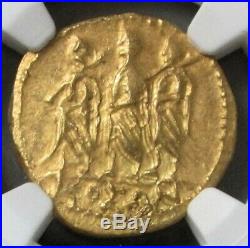
54 Bc. Gold Ancient Thracian Stater Coson Coin Ngc Choice About Unc 4/4
ALEXANDER III the GREAT Ancient LIFETIME 331BC Gold Greek Stater Coin NGC Ch AU

ALEXANDER III the GREAT Ancient LIFETIME 331BC Gold Greek Stater Coin NGC Ch AU
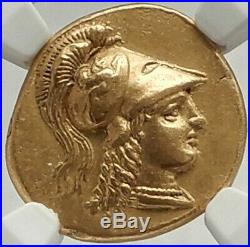
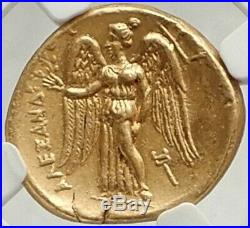
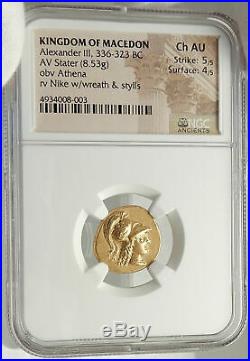
[6775] Macedonian Kingdom Alexander III the Great – King of Macedonia: 336-323 B. Gold Stater 18mm (8.53 grams) Tarsos mint. Struck under Balakros or Menes, circa 332/1-327 B. Reference: Price 3458; Muller 205 Certifiaction: NGC Ancients Ch AU Strike: 5/5 Surface: 4/5 4934008-003 Head of Athena right, wearing crested Corinthian helmet pushed back on head, the bowl decorated with griffin right. BAIE / AEANPOY, Nike standing left, holding wreath in extended right hand and cradling stylis in left arm; kerykeion below right wing. From the earliest series of staters of Alexander. This issue was originally given to Sidon by Newell, along with seven other issues of staters (and two distaters) that lacked the mint signature and/or date that is found on nearly all other issues at Sidon. Newell later doubted the attribution, and suggested they may belong to an early mint at Damaskos cf. Hill, “Alexander the Great and the Persian lion-gryphon, ” JHS 43 [1923], p. While Price retained Newell’s original attribution, he, too, remained skeptical Price, p. Le Rider, in his recent review of the coinage of Alexander the Great (Alexander the Great: Coinage, Finances, and Policy [Philadelphia, 2007]), recounted the various arguments, but also assimilated more recent research, and convincingly argues that these eight issues of gold actually were the first issues of Alexander type staters at the mint of Tarsos Le Rider, op. The reattribution to Tarsos has a significant effect on the importance of these staters. It is generally thought that Alexander began issuing his new coinage, staters of Athena/Nike type and tetradrachms of Herakles/Zeus type, shortly after his capture of Tarsos in 333 BC. Recognizing the importance of this mint for Alexander, supported by the state of the evidence at the time, Newell originally attributed a large series of staters to the early period of Alexanders at Tarsos E. Newell, “Tarsos under Alexander, ” AJN 52 [1918]. Later research, however, moved nearly all of these issues to a mint in Macedon cf. 371, and Troxell, Studies, pp. This void of gold coinage is therefore filled with the reattribution of the eight issues from Sidon, resulting in these being not only the first issue of Alexander staters from Tarsos, but the first issues of Alexander’s new stater coinage anywhere. Best known as Alexander the Great , he was a king (basileus in Greek) of the Ancient Greek kingdom of Macedonia. He was born in the city of Pella in 356 BC. By age 20, Alexander succeeded his father Philip II to the throne as king. He spent most of his years as king in an unprecedented military campaign of conquest through Asia, northeast Africa and even reached India. By age 30 he created one of the biggest empires in the ancient world, reaching from Greece to northwestern India. Being undefeated in battle, many consider him as one of history’s most successful military commanders. He could be considered one of history’s most important figures, having spread the Greek civilization far and wide, and was even admired by Julius Caesar along with many other important historical personages as well. Provided with certificate of authenticity. CERTIFIED AUTHENTIC by Sergey Nechayev, PhD – Numismatic Expert. Alexander III of Macedon (20/21 July 356 BC – 10/11 June 323 BC), commonly known as Alexander the Great , was a king (basileus) of the Ancient Greek kingdom of Macedon and a member of the Argead dynasty. Born in Pella in 356 BC, Alexander succeeded his father, Philip II, to the throne at the age of twenty. He spent most of his ruling years on an unprecedented military campaign through Asia and northeast Africa, and by the age of thirty he had created one of the largest empires of the ancient world, stretching from Greece to northwestern India. He was undefeated in battle and is widely considered one of history’s most successful military commanders. During his youth, Alexander was tutored by the philosopher Aristotle until the age of 16. After Philip’s assassination in 336 BC, Alexander succeeded his father to the throne and inherited a strong kingdom and an experienced army. Alexander was awarded the generalship of Greece and used this authority to launch his father’s Panhellenic project to lead the Greeks in the conquest of Persia. In 334 BC, he invaded the Achaemenid Empire, and began a series of campaigns that lasted ten years. Following the conquest of Asia Minor, Alexander broke the power of Persia in a series of decisive battles, most notably the battles of Issus and Gaugamela. He subsequently overthrew the Persian King Darius III and conquered the Achaemenid Empire in its entirety. At that point, his empire stretched from the Adriatic Sea to the Indus River. Seeking to reach the “ends of the world and the Great Outer Sea”, he invaded India in 326 BC, but eventually turned back at the demand of his homesick troops. Alexander died in Babylon in 323 BC, the city he planned to establish as his capital, without executing a series of planned campaigns that would have begun with an invasion of Arabia. In the years following his death, a series of civil wars tore his empire apart, resulting in several states ruled by the Diadochi, Alexander’s surviving generals and heirs. Alexander’s legacy includes the cultural diffusion his conquests engendered, such as Greco-Buddhism. He founded some twenty cities that bore his name, most notably Alexandria in Egypt. Alexander’s settlement of Greek colonists and the resulting spread of Greek culture in the east resulted in a new Hellenistic civilization, aspects of which were still evident in the traditions of the Byzantine Empire in the mid-15th century and the presence of Greek speakers in central and far eastern Anatolia until the 1920s. Alexander became legendary as a classical hero in the mold of Achilles, and he features prominently in the history and mythic traditions of both Greek and non-Greek cultures. He became the measure against which military leaders compared themselves, and military academies throughout the world still teach his tactics. He is often ranked among the most influential people in human history, along with his teacher Aristotle. The item “ALEXANDER III the GREAT Ancient LIFETIME 331BC Gold Greek Stater Coin NGC Ch AU” is in sale since Thursday, March 21, 2019. This item is in the category “Coins & Paper Money\Coins\ Ancient\Greek (450 BC-100 AD)”. The seller is “victoram” and is located in Forest Hills, New York. This item can be shipped worldwide.
  • Culture: Greek
  • Coin Type: Ancient
  • Certification Number: 4934008-003
  • Certification: NGC
  • Grade: Ch AU
  • Composition: Gold
  • Denomination: Stater

ALEXANDER III the GREAT Ancient LIFETIME 331BC Gold Greek Stater Coin NGC Ch AU
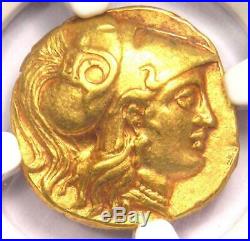
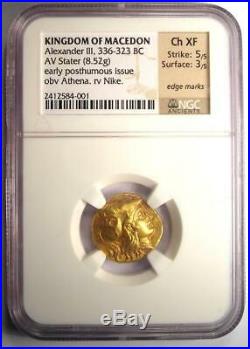
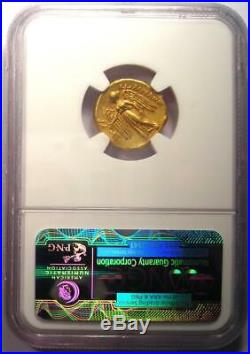
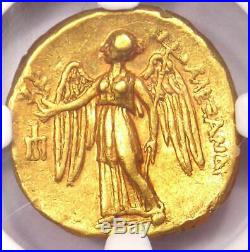
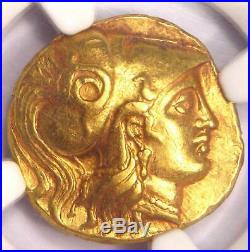
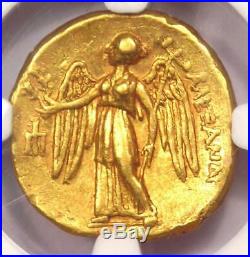
Alexander the Great III AV Gold Stater Coin 336-323 BC Certified NGC Choice XF

Alexander the Great III AV Gold Stater Coin 336-323 BC Certified NGC Choice XF
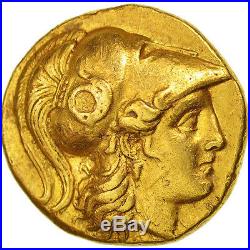
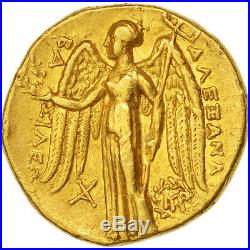
Up for sale here is an excellent Kingdom of Macedon Alexander the Great AV Stater Coin (336-323 BC, 8.52 grams, Edge Marks) that has been certified and professionally judged to be in Choice Extremely Fine Condition by the NGC Grading Service. This piece is an impressive historic Alexander the Great Gold Stater. It features the design of Athena and Nike. Quite a beautiful coin and piece of Ancient Greek History. As always, this piece is Guaranteed Genuine. About Us: Quality customer service is a top priority in our store. Thousands of satisfied customers. With rare classic gold and silver coins for their collections. We have been continuously recognized as an. For consistently providing excellent service and achieving the highest ratings from buyers of our coins. We take special care in the packing of each coin and also include free signature confirmation with every order to ensure that your coins are delivered safely. All coins that we offer are. Coin grading is subjective and all posted grades provide professional opinions. We post multiple large, clear photos of each and every coin so that you can take a look at these gorgeous pieces yourself. If you have any questions, feel free to let us know. Highest Ratings from Buyers. What Our Customers Say. The highest customer service possible. This is a person I intend to do business with in the future. As good as it gets. The item “Alexander the Great III AV Gold Stater Coin 336-323 BC Certified NGC Choice XF” is in sale since Thursday, November 21, 2019. This item is in the category “Coins & Paper Money\Coins\ Ancient\Greek (450 BC-100 AD)”. The seller is “eternitycoin” and is located in Boston, Massachusetts. This item can be shipped worldwide.
  • Country/Region of Manufacture: Greece
  • Certification: NGC
  • Grade: Choice XF
  • Composition: Gold
  • Denomination: Stater

Alexander the Great III AV Gold Stater Coin 336-323 BC Certified NGC Choice XF

Incoming search terms:

  • Alexander the Great III AV Stater Gold Coin
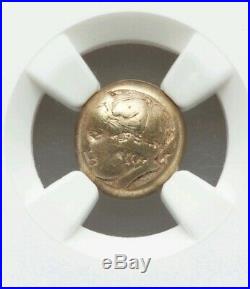
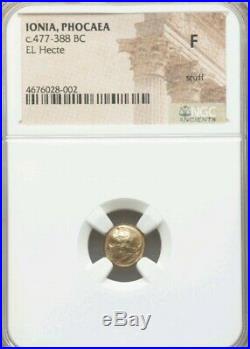
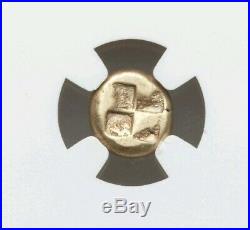
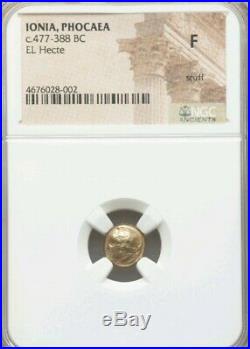
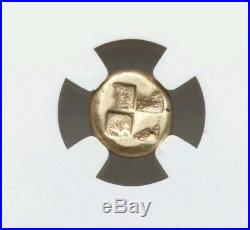
Ionia, Phocaea El Hecte 1/6th Stater NGC Fine Ancient Gold Coin

Ionia, Phocaea El Hecte 1/6th Stater NGC Fine Ancient Gold Coin
Ionia, Phocaea El Hecte 1/6th Stater NGC Fine, scuff. The item “Ionia, Phocaea El Hecte 1/6th Stater NGC Fine Ancient Gold Coin” is in sale since Thursday, August 8, 2019. This item is in the category “Coins & Paper Money\Coins\ Ancient\Greek (450 BC-100 AD)”. The seller is “corneralleycollectibles” and is located in Henderson, Nevada. This item can be shipped to United States, Canada, United Kingdom, Denmark, Romania, Slovakia, Bulgaria, Czech republic, Finland, Hungary, Latvia, Lithuania, Malta, Estonia, Australia, Greece, Portugal, Cyprus, Slovenia, Japan, China, Sweden, South Korea, Indonesia, Taiwan, South africa, Thailand, Belgium, France, Hong Kong, Ireland, Netherlands, Poland, Spain, Italy, Germany, Austria, Bahamas, Israel, Mexico, New Zealand, Philippines, Singapore, Switzerland, Norway, Saudi arabia, Ukraine, United arab emirates, Qatar, Kuwait, Bahrain, Croatia, Malaysia, Brazil, Chile, Colombia, Bangladesh, Ecuador, Cayman islands, Luxembourg, Macao, Peru, Viet nam, Uruguay.
  • Certification: NGC
  • Composition: Gold

Ionia, Phocaea El Hecte 1/6th Stater NGC Fine Ancient Gold Coin
ALEXANDER III the GREAT 323 B. C. Gold Stater Authentic Ancient Greek Coin NGC MS

ALEXANDER III the GREAT 323 B. C. Gold Stater Authentic Ancient Greek Coin NGC MS
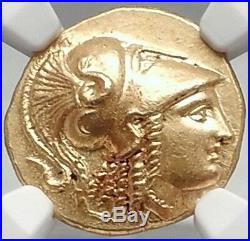
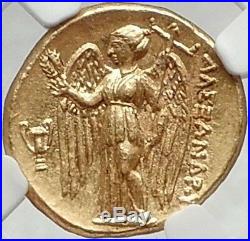
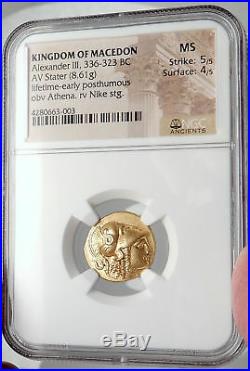
[6629] KINGS of MACEDON. Alexander III the Great – King of Macedonia: 336-323 B. Gold Stater 19mm (8.61 grams) Amphipolis mint, struck circa 325-319 BC. Reference: Price 168; Vgl. 110 Certification: NGC Ancients MS Strike: 5/5 Surface: 4/5 4280663-003 Head of Athena right, wearing crested Attic helmet decorated with coiled serpent. Nike standing left, holding wreath and stylis; kantharos in left field. Best known as Alexander the Great , he was a king (basileus in Greek) of the Ancient Greek kingdom of Macedonia. He was born in the city of Pella in 356 BC. By age 20, Alexander succeeded his father Philip II to the throne as king. He spent most of his years as king in an unprecedented military campaign of conquest through Asia, northeast Africa and even reached India. By age 30 he created one of the biggest empires in the ancient world, reaching from Greece to northwestern India. Being undefeated in battle, many consider him as one of history’s most successful military commanders. He could be considered one of history’s most important figures, having spread the Greek civilization far and wide, and was even admired by Julius Caesar along with many other important historical personages as well. Alexander III of Macedon (20/21 July 356 BC – 10/11 June 323 BC), commonly known as Alexander the Great , was a king (basileus) of the Ancient Greek kingdom of Macedon and a member of the Argead dynasty. Born in Pella in 356 BC, Alexander succeeded his father, Philip II, to the throne at the age of twenty. He spent most of his ruling years on an unprecedented military campaign through Asia and northeast Africa, and by the age of thirty he had created one of the largest empires of the ancient world, stretching from Greece to northwestern India. He was undefeated in battle and is widely considered one of history’s most successful military commanders. During his youth, Alexander was tutored by the philosopher Aristotle until the age of 16. After Philip’s assassination in 336 BC, Alexander succeeded his father to the throne and inherited a strong kingdom and an experienced army. Alexander was awarded the generalship of Greece and used this authority to launch his father’s Panhellenic project to lead the Greeks in the conquest of Persia. In 334 BC, he invaded the Achaemenid Empire, and began a series of campaigns that lasted ten years. Following the conquest of Asia Minor, Alexander broke the power of Persia in a series of decisive battles, most notably the battles of Issus and Gaugamela. He subsequently overthrew the Persian King Darius III and conquered the Achaemenid Empire in its entirety. At that point, his empire stretched from the Adriatic Sea to the Indus River. Seeking to reach the “ends of the world and the Great Outer Sea”, he invaded India in 326 BC, but eventually turned back at the demand of his homesick troops. Alexander died in Babylon in 323 BC, the city he planned to establish as his capital, without executing a series of planned campaigns that would have begun with an invasion of Arabia. In the years following his death, a series of civil wars tore his empire apart, resulting in several states ruled by the Diadochi, Alexander’s surviving generals and heirs. Alexander’s legacy includes the cultural diffusion his conquests engendered, such as Greco-Buddhism. He founded some twenty cities that bore his name, most notably Alexandria in Egypt. Alexander’s settlement of Greek colonists and the resulting spread of Greek culture in the east resulted in a new Hellenistic civilization, aspects of which were still evident in the traditions of the Byzantine Empire in the mid-15th century and the presence of Greek speakers in central and far eastern Anatolia until the 1920s. Alexander became legendary as a classical hero in the mold of Achilles, and he features prominently in the history and mythic traditions of both Greek and non-Greek cultures. He became the measure against which military leaders compared themselves, and military academies throughout the world still teach his tactics. He is often ranked among the most influential people in human history, along with his teacher Aristotle. The item “ALEXANDER III the GREAT 323 B. C. Gold Stater Authentic Ancient Greek Coin NGC MS” is in sale since Wednesday, November 14, 2018. This item is in the category “Coins & Paper Money\Coins\ Ancient\Greek (450 BC-100 AD)”. The seller is “victoram” and is located in Forest Hills, New York. This item can be shipped worldwide.
  • Culture: Greek
  • Coin Type: Ancient
  • Material: Gold
  • Certification Number: 4280663-003
  • Certification: NGC 5/5; 4/5
  • Grade: MS
  • Composition: Gold
  • Denomination: Stater

ALEXANDER III the GREAT 323 B. C. Gold Stater Authentic Ancient Greek Coin NGC MS
54 Bc. Gold Ancient Thracian Stater Coson Coin Ngc Choice About Unc 3/4

54 Bc. Gold Ancient Thracian Stater Coson Coin Ngc Choice About Unc 3/4
DACIAN (GETAE) KINGDOM ca. 1st CENTURY BC-2nd CENTURY AD. REIGN OF THE DYNAST. (REIGNED AFTER 54 BC). CERTIFIED BY NGC ABOUT UNCIRCULAATED. TWO LICTORS CARRYING FASCES FLANKING AND ACCOMPANYING A ROMAN CONSUL (SAID TO BE BRUTUS OR BRUTUS’ ANCESTOR LUCIUS JUNIUS BRUTUS) LEFT; GREEK LEGEND “KOSON” IN EXERGUE; OUTER BEADING. EAGLE LEFT STANDING ON SCEPTER AND HOLDING LAUREL WREATH IN CLAW. THIS TYPE COIN IS SAID TO HAVE BEEN INSPIRED BY A DENARIUS ISSUED BY. (85-42 BC), ONE OF THE CONSIPIRATORS THAT ASSASSINATED. ON THE STEPS OF THE SENATE IN 44 BC. BRUTUS WAS ADMIRED IN HIS TIME FOR HIS INTELLECT AND POLITICAL INTEGRITY, AND HE BETRAYED HIS FRIEND AND BENEFACTOR CAESAR TO PREVENT THE LATTER FROM DESTROYING THE ROMAN REPUBLIC. THE DENARIUS ISSUE OF BRUTUS HAD BEEN STRUCK WHILE HE WAS MONEYER OF THE REPUBLIC IN 54 BC. THIS STATER WAS STRUCK AFTER CAESAR’S DEATH. BRUTUS AND HIS CO-CONSPIRATOR CASSIUS HAD FLED TO THE EASTERN PART OF THE EMPIRE TO RAISE AND PAY FOR HIS 17 LEGIONS TO FIGHT THE COMBINED TROOPS OF MARC ANTONY AND OCTAVIAN DURING THE ROMAN CIVIL WAR. THIS COIN IS SAID TO HAVE BEEN STRUCK WHILE BRUTUS WAS RAISING TROOPS IN NORTHERN GREECE IN PREPARATION FOR HIS FINAL BATTLE AT PHILIPPI. (WHO WAS ALLIED WITH BRUTUS) IS SAID TO HAVE FURNISHED THE GOLD THAT BRUTUS USED. THE ROMAN AUTHOR APPIAN STATES THAT COSON’S WIFE DELIVERED GOLD AND SILVER TO BRUTUS IN GREECE. BRUTUS AND CASSIUS WERE DEFEATED AT PHILIPPI BY OCTAVIAN (LATER TO BE KNOWN AS AUGUSTUS) AND MARC ANTHONY, AND BRUTUS COMMITTED SUICIDE SHORTLY AFTER THE BATTLE. THERE IS AN INTERPRETATION THAT THIS COIN IS THAT OF COTISO(N), A GETIC KING AND ALLY OF OCTAVIAN. OCTAVIAN IS SAID TO HAVE PROPOSED AN ALLIANCE OF MARRIAGE OF HIM TO COTISON’S DAUGHTER AND OF OCTAVIA, OCTAVIAN’S SISTER, TO THE GETIC KING. THE PROPOSAL NEVER CAME TO FRUITION AS MARC ANTHONY, ALREADY BETROTHED TO OCTAVIAN’S SISTER, OBJECTED. THOUGH THIS VERSION IS SUBSTANTIATED BY THE IMPORTANT ECONOMIC TI ES OF ROME TO DACIA AND HOARDS OF THIS TYPE STATER HAVE BEEN FOUND IN TRANSYLVANIA RATHER THAN BULGARIA (DACIA RATHER THAN THRACE), THE MORE LIKELY ORIGIN IS THAT BOTH COTISO(N) AND COSON (KOSON) ARE THE SAME PERSON AND SEVERAL ROMAN AUTHOR’S IMPLY THE COSON/BRUTUS ORIGIN IS ACCURATE. THIS COIN WAS STRUCK BETWEEN 44 AND 42 BC. WAS A BRANCH OF THE THRACIANS AND CORRESPONDED IN TERRITORY TO ROMANIA, MOLDOVA AND PARTS OF THE UKRAINE, HUNGARY AND BULGARIA. AS FAR AS ANY REFERENCE TO SCYTHIANS, THE SCYTHIANS WERE A NOMADIC IRANIAN TRIBAL STEPPE PEOPLE THAT WERE KNOWN TO THE CLASSICAL GREEKS, BUT THE ROMANS USED THE TERM TO DESIGNATE ANY GERMANIC BARBARIAN TRIBE OR CONFEDERATION, AS THE CLASSICAL SCYTHIANS DISSAPPEARED BEFORE THE FIRST CENTURY BC. CONTAINS 8.42 GRAMS OF GOLD. 17 MM TO 18 MM IN DIAMETER. We cannot declare any package as a “gift”, sampleetc. The item “54 BC. GOLD ANCIENT THRACIAN STATER COSON COIN NGC CHOICE ABOUT UNC 3/4″ is in sale since Monday, March 25, 2019. This item is in the category “Coins & Paper Money\Coins\ Ancient\Other Ancient Coins”. The seller is “rarecoincollector” and is located in Fort Lauderdale, Florida. This item can be shipped worldwide.
  • Certification: NGC
  • Grade: MS 3/5 4/5
  • UPC: Does Not Apply

54 Bc. Gold Ancient Thracian Stater Coson Coin Ngc Choice About Unc 3/4
Ionia, Phocaea El Hecte 1/6th Stater NGC Fine Ancient Gold Coin

Ionia, Phocaea El Hecte 1/6th Stater NGC Fine Ancient Gold Coin
Ionia, Phocaea El Hecte 1/6th Stater NGC Fine, scuff. The item “Ionia, Phocaea El Hecte 1/6th Stater NGC Fine Ancient Gold Coin” is in sale since Friday, June 7, 2019. This item is in the category “Coins & Paper Money\Coins\ Ancient\Greek (450 BC-100 AD)”. The seller is “corneralleycollectibles” and is located in Henderson, Nevada. This item can be shipped to United States, Canada, United Kingdom, Denmark, Romania, Slovakia, Bulgaria, Czech republic, Finland, Hungary, Latvia, Lithuania, Malta, Estonia, Australia, Greece, Portugal, Cyprus, Slovenia, Japan, China, Sweden, South Korea, Indonesia, Taiwan, South africa, Thailand, Belgium, France, Hong Kong, Ireland, Netherlands, Poland, Spain, Italy, Germany, Austria, Bahamas, Israel, Mexico, New Zealand, Philippines, Singapore, Switzerland, Norway, Saudi arabia, Ukraine, United arab emirates, Qatar, Kuwait, Bahrain, Croatia, Malaysia, Brazil, Chile, Colombia, Bangladesh, Ecuador, Cayman islands, Luxembourg, Macao, Peru, Viet nam, Uruguay.
  • Certification: NGC
  • Composition: Gold

Ionia, Phocaea El Hecte 1/6th Stater NGC Fine Ancient Gold Coin
#47352 Coin, Kingdom of Macedonia, Alexander III, Stater, 317-311 BC, Babylon

#47352 Coin, Kingdom of Macedonia, Alexander III, Stater, 317-311 BC, Babylon
Pages de la Boutique. Catégories de la Boutique. Monnaies et Billets Euro. AJOUTEZ NOUS À VOS FAVORIS ET SOYEZ INFORMÉS DES PROMOTIONS. [#47352] Coin, Kingdom of Macedonia, Alexander III, Stater, 317-311 BC, Babylon. Macedonia, Alexander The Great, Gold Stater, Babylon, 317-311 BC, Price 3724 Postumous issue, struck under Peithon, for Antigonos I Monophthalmos Graded NGC AU Strike 5/5 Surface 3/5. Head of Athena right, wearing crested Corinthian helmet decorated with coiled serpent. Nike standing left, holding wreath and stylis, monogram below left wing, monogram inside wreath under right wing. There are no exceptions to this rule. All items are unconditionally guaranteed to be authentic and checked by at least two numismatic experts. Certificate of Authenticity upon request. The pictured item is the one you will receive. 7 numismatic shops in France. Headoffice : 7 Rue Nationale (4th floor), 59000, LILLE (FRANCE). Coins, Tokens, Medals, Banknotes, Militaria, Numismatic supplies. The item “#47352 Coin, Kingdom of Macedonia, Alexander III, Stater, 317-311 BC, Babylon” is in sale since Saturday, February 20, 2016. This item is in the category “Coins & Paper Money\Coins\ Ancient\Greek (450 BC-100 AD)”. The seller is “cdma59″ and is located in Lille. This item can be shipped worldwide.
  • Certification: NGC
  • Certification Number: 3934396-005
  • Composition: Gold
  • Denomination: Stater
  • Grade: AU

#47352 Coin, Kingdom of Macedonia, Alexander III, Stater, 317-311 BC, Babylon
Gold AV Stater Kingdom of Macedon Alexander III BC 336-323 XF NGC Ancient Coin

Gold AV Stater Kingdom of Macedon Alexander III BC 336-323 XF NGC Ancient Coin
AV Stater – Very lustrous and beautiful example of this rare gold coin. Choice XF with Strike of 5/5 and Surface of 3/5 graded by NGC. Obverse features Athena while the reverse features Nike with wreath and stylis. Weight of 8.56 grams. The item “Gold AV Stater Kingdom of Macedon Alexander III BC 336-323 XF NGC Ancient Coin” is in sale since Tuesday, January 30, 2018. This item is in the category “Coins & Paper Money\Coins\ Ancient\Greek (450 BC-100 AD)”. The seller is “powellcoins” and is located in Astoria, New York. This item can be shipped to North, South, or Latin America, all countries in Europe, Australia.
  • Cleaned/Uncleaned: Uncleaned
  • Composition: Gold

Gold AV Stater Kingdom of Macedon Alexander III BC 336-323 XF NGC Ancient Coin
PHILIP II Father of Alexander the Great Ancient 323BC Gold Stater Greek Coin NGC

PHILIP II Father of Alexander the Great Ancient 323BC Gold Stater Greek Coin NGC
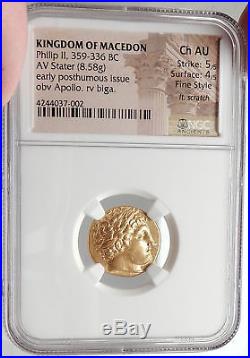
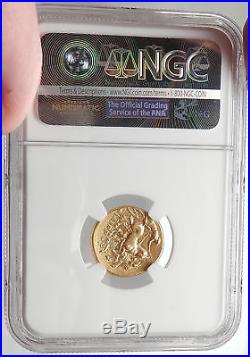
[6598] Kingdom of Macedonia Philip II – King: 359-336 B. (Father of Alexander III the Great) Gold Stater (19mm, 8.58 gm, 4h). Posthumous issue of Abydus mint, struck circa 323-319 B. Reference: Thompson, ADM II, 88-89. SNG ANS 298 Certification: NGC Ancients Ch AU Strike: 5/5 Surface: 4/5 Fine Style 4244037-002 Laureate head of Apollo right. Charioteer, holding kentron and reins, driving racing biga right; below, IIOY in exergue. Provided with certificate of authenticity. CERTIFIED AUTHENTIC by Sergey Nechayev, PhD – Numismatic Expert. Philip II of Macedon (382-336 BC) was the king (Basileus) of the Ancient Greek kingdom of Macedon from 359 BC until his assassination in 336 BC. He was a member of the Argead dynasty of Macedonian kings, the third son of King Amyntas III, and father of Alexander the Great and Philip III. The rise of Macedon during the reign of Philip II was achieved in part by his reformation of the Ancient Macedonian army, establishing the Macedonian phalanx that proved critical in securing victories on the battlefield. After defeating Athens and Thebes at the Battle of Chaeronea in 338 BC, Philip II led the effort to establish a federation of Greek states known as the League of Corinth, with him as the elected hegemon and commander-in-chief of a planned invasion of the Achaemenid Empire of Persia. However, his assassination led to the immediate succession of his son Alexander, who would go on to invade the Achaemenid Empire in his father’s stead. The item “PHILIP II Father of Alexander the Great Ancient 323BC Gold Stater Greek Coin NGC” is in sale since Wednesday, January 17, 2018. This item is in the category “Coins & Paper Money\Coins\ Ancient\Greek (450 BC-100 AD)”. The seller is “victoram” and is located in Forest Hills, New York. This item can be shipped worldwide.
  • Culture: Greek
  • Coin Type: Ancient
  • Denomination: Stater
  • Composition: Gold
  • Certification: NGC
  • Certification Number: 4244037-002
  • Grade: Ch AU

PHILIP II Father of Alexander the Great Ancient 323BC Gold Stater Greek Coin NGC
Company S.A.
CIF: B123456789
New Burlington St, 123
CP: W1B 5NF London (United Kingdom)
Tel: 9XX 123 456

office@company.com